

What Goes Around Comes Around: The Benefits of Roundabouts
Topics
Jun 8, 2026
As Kelowna continues to grow, so does the need for transportation infrastructure that supports a safe, efficient and connected community. One of the ways the City is meeting that need is through the increased use of roundabouts as part of its transportation network.
“Roundabouts are more than just an alternative to traffic signals,” says Nathan Carswell, Strategic Transportation Planning Manager for the City. “They are a long-term investment in safer streets, smoother traffic flow and more livable neighbourhoods.”
City Council is committed to investing in infrastructure that supports daily life, improves safety and delivers value for current and future residents. When infrastructure projects are planned and delivered, the City considers how people move through the community by all modes of transportation.
The decision to create more roundabouts aligns with the goals of Kelowna’s Safe Mobility Action Plan, which outlines a strategy to eliminate serious injuries and fatalities on our roads. The Plan follows the Safe System Approach, a framework focused on reducing road risks and protecting vulnerable road users. It emphasizes managing vehicle speeds, improving intersection design and minimizing the potential for severe collisions.
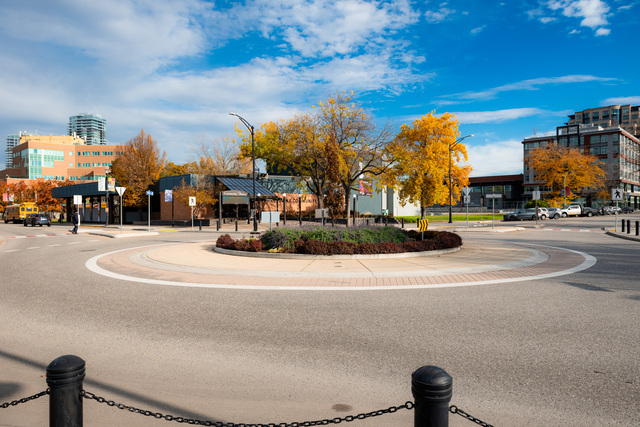
Beyond safety, roundabouts also improve efficiency. Instead of waiting through multiple traffic light cycles, drivers can often move through intersections with less delay. This helps reduce congestion, particularly during busy travel periods.
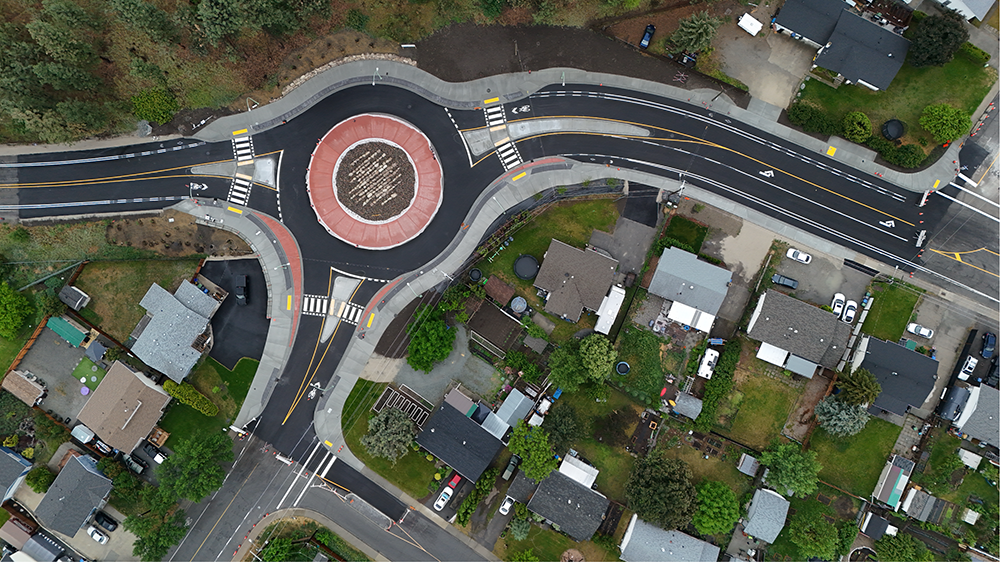
The benefits extend beyond drivers. Modern roundabouts are designed to support people walking, rolling, and biking through features such as pedestrian crossings, multi-use pathways and dedicated biking infrastructure. By accommodating a variety of transportation options, roundabouts help create a more connected community.
Long term Value
While construction costs can be higher initially, roundabouts generally require less maintenance than traffic signals over their lifespan. Reduced vehicle idling and stop-and-go traffic can also help lower emissions, contributing to environmental sustainability goals.
As the City of Kelowna plans for the future, roundabouts are becoming an important part of building a transportation network that prioritizes safety, efficiency, and quality of life for residents today and for generations to come.
Want to see where Kelowna is headed next? Explore the 2040 Transportation Master Plan to learn more about the City’s long-term vision for better roadway infrastructure.
How to use a Roundabout
Roundabouts have been used in communities for years, but they may still be unfamiliar to some people. If you are unsure how to use a one or need a refresher, check out ICBC’s guide to using roundabouts.