

The science behind street sweeping: keeping our air and water clean
Topics
Mar 30, 2026
Every trip on city streets leaves something behind. Tires shed fine bits of tread as they move. Sand used for winter traction loosens and scatters as the snow melts. Leaves fall onto the roadway and are broken down by traffic.
“Without intervention, from the City’s Street Sweeping Program, material gathering on the streets can pose safety risks,” said Andrew Schwerdtfeger, Roadways Operations manager. “Passing vehicles can kick debris back into traffic, where it can strike people or vehicles, pool on the roadway, or cause air quality issues.”
Sweeping is an important tool to manage air quality, removing fine particles from the roadway that might otherwise become airborne. Streets are also pre-wetted before and during sweeping to reduce dust and limit the spread of material, further protecting air quality.
As a second layer of protection, the City’s Catch Basin Clearing program manages what sweeping cannot catch. This program helps reduce the amount of debris that ends up in catch basins, the grated openings along street curbs that collect rainwater and carry it into the stormwater system.
Cleaning the basins removes metals and fluids from vehicle tire compounds, brake material and engine fluids that wind up in the catch basins and would ultimately wind up in our ground and lake water.
By clearing debris from basins before it enters the pipe network, crews also help prevent blockages, localized flooding, and costly damage that requires specialized equipment and disruptive repairs. This work is accomplished by the dedicated crews on the City’s vacuum truck fleet.
“Kelowna is one of the only communities in the country that cleans every single catch basin each year,” said Jim Hager, Utility Engineer. “That upfront investment reflects our commitment to protecting water quality and managing stormwater responsibly and it helps reduce far more costly fixes down the road.”
The street and catch basin cleaning programs limit how much debris moves from streets into the stormwater network and onward into streams, ponds, wetlands, and eventually Okanagan Lake, where it can affect water quality and the health of aquatic ecosystems.
Managing street debris is a four-season job that largely depends on weather conditions, and the types of materials working through the system in each season.
In winter, cold temperatures limit both street sweeping and routine catch basin cleaning. During this period, crews shift their focus to preparation, such as repairing and rebuilding equipment so it is ready when conditions improve.
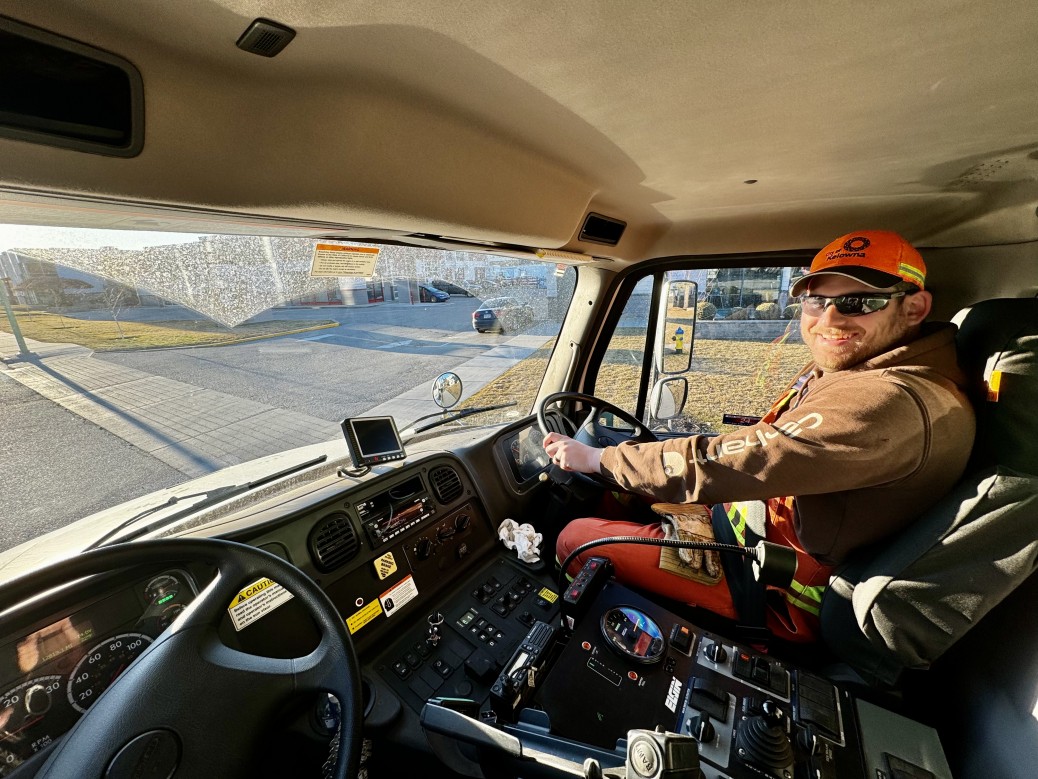
“Street sweepers are essentially spinning brooms mounted on a dump truck,” adds Schwerdtfeger. “Material is pulled in, carried up a conveyor system, and dumped. That level of complexity, combined with the wear and tear these machines experience, is why every unit needs to be rebuilt each winter.”
Street sweepers are taken offline and rebuilt one unit at a time, a process that typically takes one to two months per machine.
When spring arrives, both programs ramp up. Street sweeping crews begin the most intensive cleanup of the year, removing material that accumulated over the winter. Catch basin cleaning resumes at the same time, clearing basins across the city before runoff increases. These efforts continue through summer and fall.
Catch basin clean outs are a key action in the City’s Water Security Plan, adopted by Council in 2025, which is a comprehensive strategy to use, protect, and share water, now and in the future.
Managing debris at the street level helps prevent pollution from moving deeper into the system and ending up in streams, ponds, groundwater, and Okanagan Lake. It is a practical, preventative approach that protects infrastructure and water quality.
Because debris collects most heavily along the curb, access matters. By removing their cars during scheduled street sweeping periods, residents can help prevent debris from hitting people who are walking, biking or rolling, help protect our air and water, and play a role in reducing the amount of public money spent on issues that are prevented through sweeping.
Residents can find street sweeping schedules here: Street sweeping & litter removal | City of Kelowna.