
DeHart Park: designed with the future in mind

Topics
May 11, 2026
In Kelowna, parks are being planned as more than amenities. They are part of a broader city-building approach that brings together beautiful public spaces, environmental responsibility, and opportunities for people to gather, play, and connect.
DeHart Community Park is one example of that approach in action. While the project has received recognition for environmental sustainability, its bigger significance is how it reflects the City of Kelowna’s commitment to designing parks that are welcoming, resilient, and built to serve the community for generations.
Spread across nine acres, DeHart Community Park reflects a bigger vision for what public space can be. Guided by the City’s 2040 Official Community Plan sustainability targets, the park was planned and delivered with carbon neutrality as a core design requirement, showing how Kelowna is embedding climate considerations into the way it shapes neighbourhood spaces across the city.
For residents, that approach is visible in parks that are not only functional, but inviting and restorative—places where neighbourhood life can unfold in ways that support health, connection, and a stronger relationship with the natural environment.
“Protecting the environment is a clear Council priority and this latest recognition shows we are delivering on our commitment to reducing emissions, strengthening climate resilience, and caring for natural areas,” said Mayor Tom Dyas. “Kelowna continues to bring leadership and ingenuity to the services, amenities, and infrastructure it provides for residents.”
From the beginning, the City tracked the project’s carbon footprint to help guide major decisions, from how the park would function to the materials used to build it. That approach helped balance community needs with climate impacts, making sustainability part of the project from the ground up rather than an added feature at the end.
That early focus shaped the park in visible and lasting ways.
“DeHart Community Park shows what’s possible when climate goals are built into a project from day one,” said Melanie Steppuhn, the City of Kelowna’s Parks Planning and Design Manager. By tracking carbon and prioritizing ecosystem support, she said, the City created a park that encourages community connection while helping reduce long-term environmental impacts.
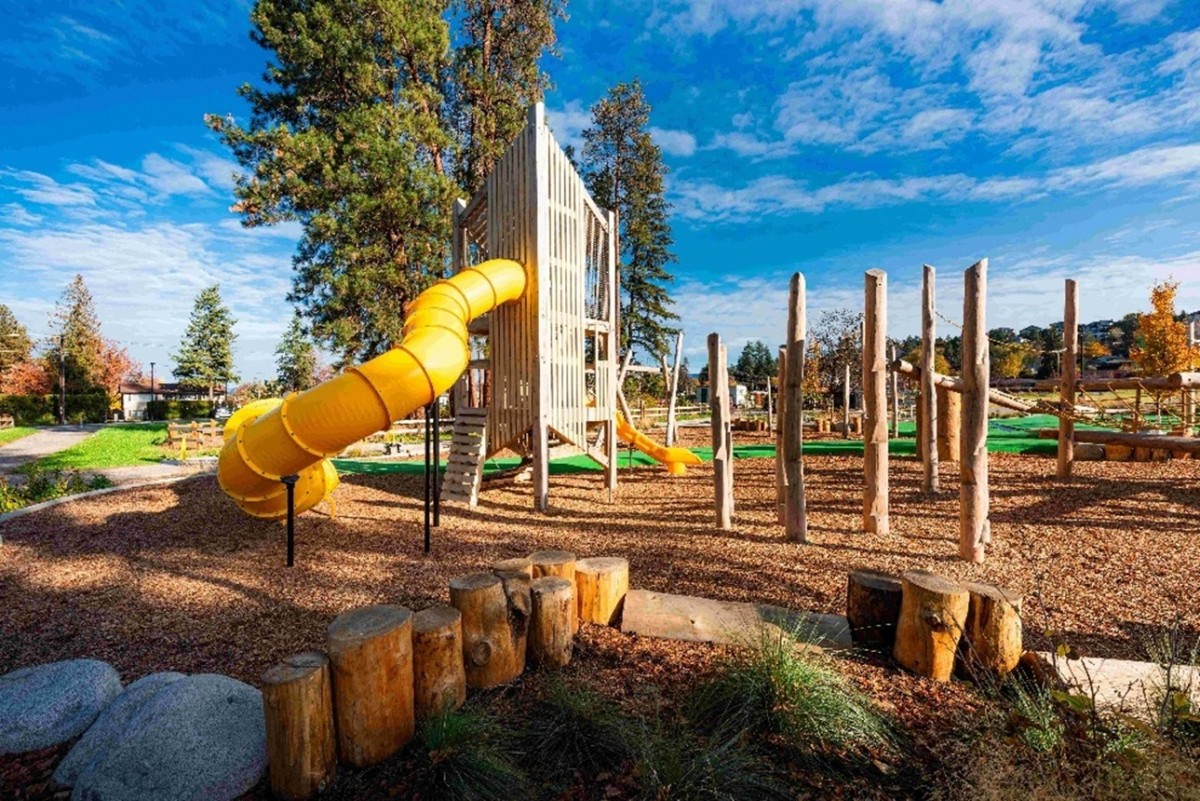
Playground at DeHart Community Park which opened to the public in 2025.
Those choices can be seen throughout the park. Its design supports habitat restoration, pollinator-friendly landscaping, water-wise features, and the protection of mature trees and naturalized areas wherever possible. The project also embraced low-impact landscaping by reducing paved surfaces and reusing trees on site for habitat and park features, choices that can lower long-term maintenance needs and reduce environmental effects over time.
For the team behind the project, DeHart reflects what is possible when parks planning is approached with collaboration and long-term thinking. It is part of a wider commitment to creating spaces that people can enjoy today while strengthening environmental stewardship and community wellbeing into the future.
The $8.6 million project also tells a broader story about how Kelowna is investing in growth. DeHart Community Park was partially funded through Parks Development Cost Charges, helping offset growth-related costs and reduce pressure on taxation, while creating a hub for active living, connection, and quality of life.
DeHart Community Park is part of a larger network of more than 200 City-owned parks that help shape everyday life in Kelowna. Together, these spaces reflect an ongoing commitment to parks that are thoughtfully planned, environmentally responsible, and designed to bring people together.
Residents can explore the full parks network at kelowna.ca/parks and learn more about current projects underway at kelowna.ca/capitalprojects.
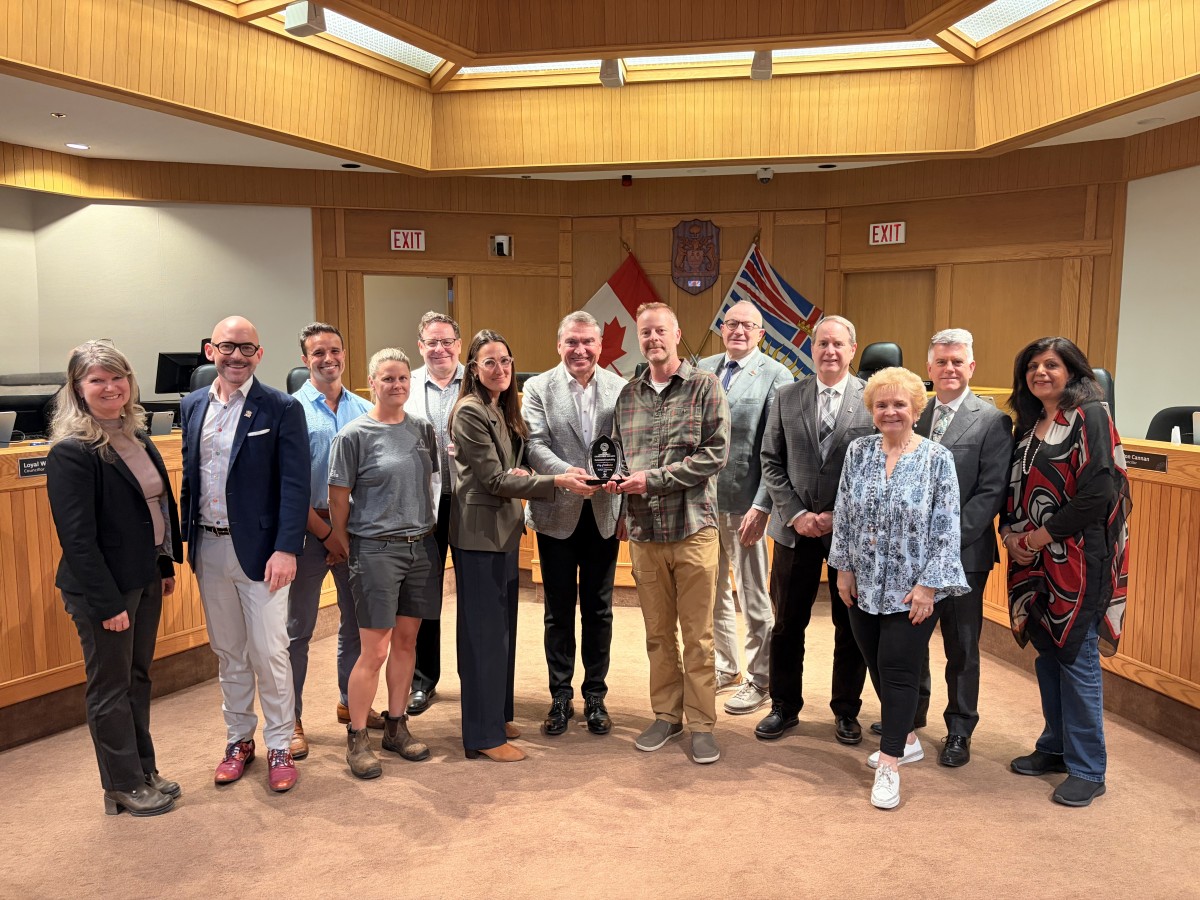
City of Kelowna staff and Bench Site Design appeared alongside Mayor and Councillors in recognition of DeHart Park receiving the SILGA Community Excellence Award for Environmental Sustainability.