
Seeing the consequences up close: OKM students take part in impaired driving simulation

Topics
May 13, 2026
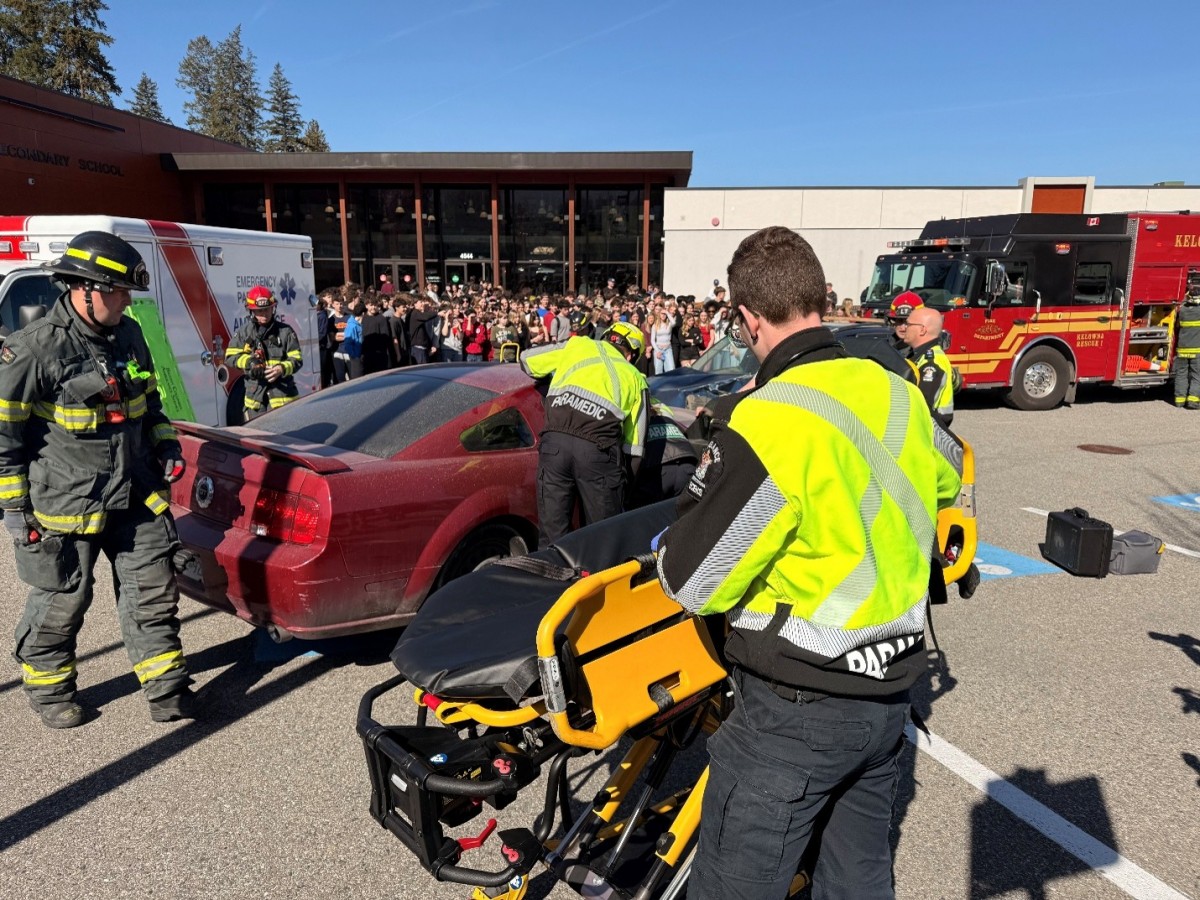
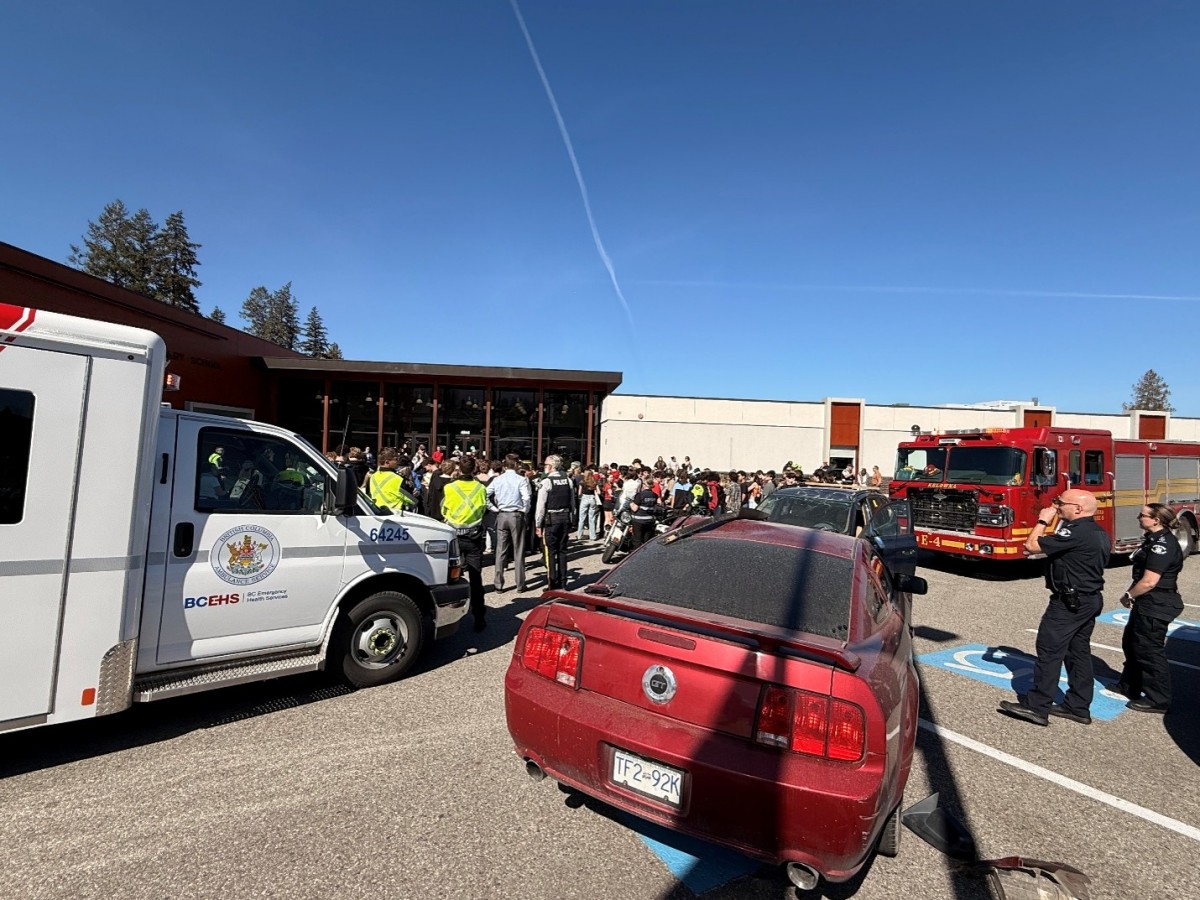
On April 9th, 2026, the sounds and sights of emergency sirens, first responders, and a staged vehicle collision turned the Okanagan Mission Secondary campus into something far from routine.
For Grade 12 students gathered to watch, the realistic impaired driving simulation offered a powerful look at what can happen when a single decision goes wrong.
The scenario unfolded as it would in real life: damaged vehicles, injured occupants, and the coordinated response of police, fire, paramedics, and emergency support personnel working together under pressure. The goal wasn’t just to shock, it was education grounded in reality, and an honest conversation about safety, responsibility, and choice.
“The purpose of having the event at OKM was to give a firsthand representation for Grade 12 students about the significant consequences of impaired driving,” says Cpl. Steven Lang, Kelowna RCMP Media Relations Officer. “It was important to have the collaboration of emergency services to show the intensity of a scene and the complexity of the aftermath of an incident. The event also marked the first deployment of our Auxiliary program members who were on hand to assist with the event and talk with students afterwards about a career in the RCMP.”
Learning from those on the front lines
Following the simulation, students had the opportunity to speak directly with emergency personnel. Conversations touched on the emotional impact of responding to serious collisions, the long‑term consequences faced by victims and families, and how first responders manage the realities of impaired driving incidents.
Those exchanges were a key part of the experience. By hearing honest, firsthand answers from police officers, firefighters, paramedics, BC Prosecution Services and RCMP Auxiliary members, students could better understand that impaired driving doesn’t end when the scene is cleared, it has ripple effects across families, neighbourhoods, and the community as a whole.
“The BC Prosecution Service was honoured to be part of the impaired driving simulation and scenario at Okanagan Mission Secondary School on April 9, 2026,” said David Grabavac, Crown Counsel. “Every year in BC, many people are needlessly killed or injured by impaired drivers. Education is the key to making roads in BC safer. The legal consequences for a driver convicted of impaired driving include a mandatory driving prohibition for a year and a minimum fine of $1000.”
“The legal consequences for a driver convicted of impaired driving causing death or bodily harm include a mandatory driving prohibition and can result in that driver being sentenced to custody in a federal penitentiary for many years. The effect on victims and their families is profound. Our hope is that events like this will bring greater awareness to both young and experienced drivers about the importance of choosing safe driving options.”
A shared responsibility for student safety
School staff say experiences like this help students connect classroom learning with real‑world decision‑making.
“Students regularly face peer‑influenced decisions that can have a lasting impact on their future,” says Brett Beaudry, Vice Principal at Okanagan Mission Secondary. “Through authentic, real‑world learning experiences and meaningful partnerships with dedicated community members, we support students in understanding the consequences of their choices while building the skills needed to make informed, thoughtful decisions.
“This collaborative approach reinforces that student success and safety are a shared responsibility, guided by caring adults both within and beyond the school community. With a stronger understanding of how their choices affect themselves and others, students are better prepared to navigate future challenges.”
Community Safety in action
The impaired driving simulation reflects Kelowna’s broader approach to Community Safety, which emphasizes prevention, education, and collaboration. By engaging youth before potentially risky behaviours become habits, emergency services and schools work together to support safer choices and healthier outcomes for everyone.
The event also demonstrated how different parts of the emergency response system fit together, including the role of RCMP Auxiliary members, who support frontline operations while strengthening community connections through engagement and outreach.
Through initiatives like this, Kelowna continues to focus on reducing harm, supporting informed decision‑making, and building a safer community for all ages, on the road, at school, and beyond.
To learn more about Kelowna’s Community Safety initiatives and how individuals, schools, business and partners contribute to safer neighbourhoods, visit kelowna.ca/communitysafety.