

Budget Planning
Planning the
City Budget
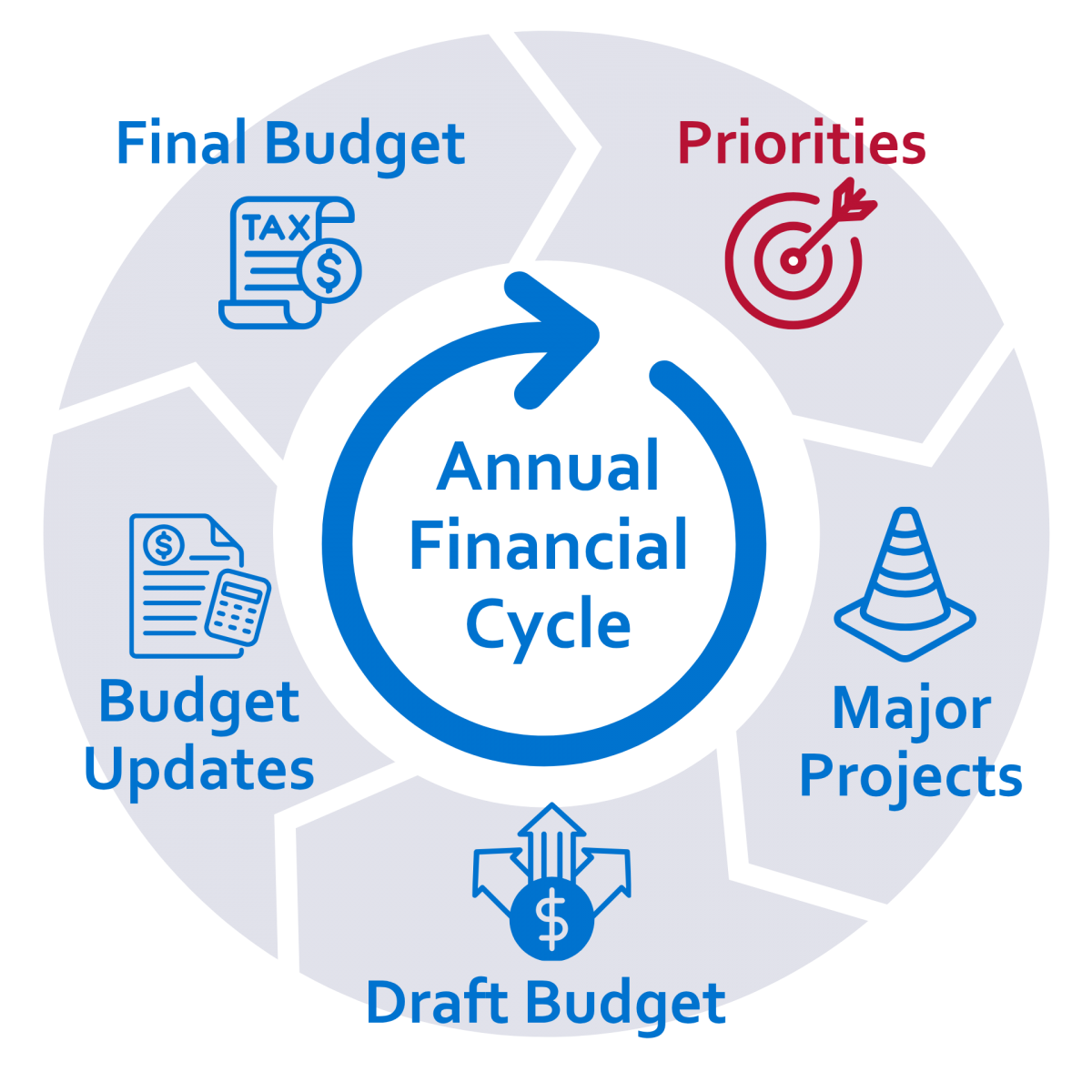
Our Annual Financial Cycle delivers value and stability.
Kelowna’s budget is shaped through a year‑round process that ties every funding decision to community priorities. By planning 5, 10, and 20 years ahead, we spend wisely, keep taxes reasonable, and deliver lasting value.
Explore our the Annual Financial Cycle
How does Kelowna decide how to invest your tax dollars? Through an Annual Financial Cycle that links community priorities to long‑term planning. By starting with what matters most and mapping out major projects, we deliver dependable services and smart, future‑focused investments.
See the Details
Watch Budget Day on demand
City Council deliberated the preliminary 2026 budget on Thursday, December 4, 2025, and adopted the final budget on May 4, 2026. View the Council meetings anytime, on demand at kelowna.ca/council.
Your priorities serve as our compass
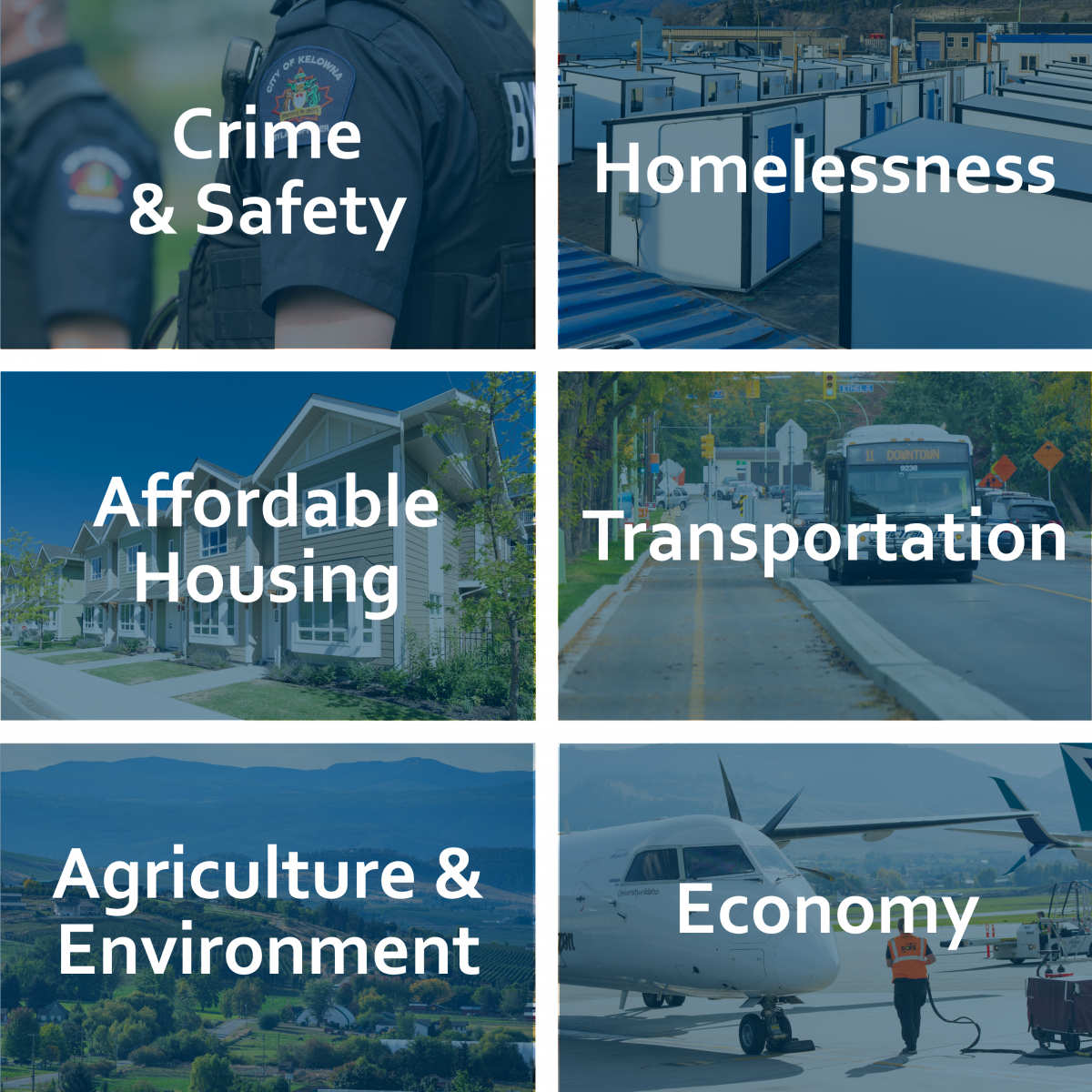
From Crime & Safety, Homelessness, and Affordable Housing, to Transportation, Agriculture & Environment, and Economy, these six priorities guide how we invest—whether it’s creating safer streets, building more housing, or improving transportation—so every dollar works toward making life better for our community.
Explore PrioritieS
See how we build the budget
Dive into each step of the Annual Financial Cycle. You'll learn about key milestones and access meeting agendas and on-demand videos to see how the City budget comes together.
Our Annual Financial Cycle starts with what matters most to you.
Each spring, Council reviews progress on key priorities—like safety, housing, transportation, and the economy—using the Progress Report on Council Priorities. They also review Council Priority Action Reports, service levels, performance data, and comparisons with other cities throughout the year to understand where we’re doing well and where we can improve.
These insights help shape the strategic direction for next year’s budget, ensuring it reflects the needs and values of our growing community.
Next, we look at long-term infrastructure and capital needs.
In the fall, Council focuses on major capital investments—like roads, parks, utilities, and recreation facilities—through the capital planning process. The 10-Year Capital Plan helps identify which projects are most urgent and ready for construction, and which are anticipated later.
Behind the scenes, staff prepare detailed budget requests and explore funding options like grants, reserves, and partnerships to reduce our reliance on property taxes. The City Manager reviews all requests to ensure they fit with Council's priorities.
From priorities to projects, Council decides the draft budget.
In December, Council holds an all-day public meeting to review the draft budget—officially called the Financial Plan Preliminary Volume 1. The budget includes both operating costs like snow clearing, fire protection, and recreation, as well as capital projects like new roads or facility upgrades from the 10-Year Capital Plan.
The City uses a service-based budgeting model, which organizes costs into 20 service areas (e.g., parks, transportation) rather than by department. This makes it easier to see how your tax dollars are being used and to weigh trade-offs between services.
As Council deliberates, each decision includes a funding breakdown showing whether revenues come from taxes, user fees, reserves, grants, or other sources. Explore current and past City budgets at kelowna.ca/budget.
Year-round oversight keeps spending on track and taxes stable.
Once the draft budget is approved in December, Council continues to monitor spending and performance. From January to March, they approve carryover budgets for projects that weren’t completed the previous year—so they can move forward without new tax increases.
After the final budget is passed in April, Council tracks financial performance in May, August, November and March, and makes real-time adjustments to ensure spending stays aligned with community needs and priorities.
Lastly, Council confirms the final budget, tax rates, and five-year plan.
In late spring, Council approves the Final Budget, which includes any adjustments made since the draft budget in December. They also adopt the Five-Year Financial Plan and set property tax rates through the Annual Tax Rates Bylaw.
This last step locks in the City’s financial roadmap for the year ahead and allows Council to keep spending and projects on track. Tax notices are mailed in May, with payments due by early July.
As one Annual Financial Cycle wraps up, another begins—bringing fresh opportunities to shape the future of our city. At the heart of each cycle is a desire to meet the needs of our community while keeping taxes stable.
How far do we plan?
Kelowna’s budget isn’t just about this year—it’s about the next 5, 10, even 20 years. Every dollar we spend is part of a bigger plan to keep our city thriving, affordable, and ready for the future.
We set priorities every 4 years
After each municipal election, Council sets the priorities—like housing, safety, and transportation—that shape which projects move forward through the City’s Annual Financial Cycle.
We budget 5 years ahead
Council uses the Five-Year Financial Plan to carefully assess current funding needs and future budget impacts—ensuring property taxes stay fair and predictable, not left to chance.
We plan projects 10 years ahead
From new parks or roads to community facilities, the 10-Year Capital Plan is both a construction schedule—funded via the Five-Year Financial Plan—and a long-term wish list for Council to explore.
We plan our city 20 years ahead
The 2040 Official Community Plan (OCP) is Kelowna’s roadmap for housing, transportation, parks, and economic development—essentially, shaping the kind of community we want Kelowna to become. The OCP is built on the foundation of Imagine Kelowna, our community-driven vision for a connected, inclusive, and sustainable city.
Do plans fit together?
Yes! The OCP sets the direction for Kelowna’s future, the 10-Year Capital Plan translates that vision into major projects, and the 5-Year Financial Plan ensures we can afford it. Together, these multi-year planning frameworks turn long-term goals into real-world results.