

Heritage Alteration Permits
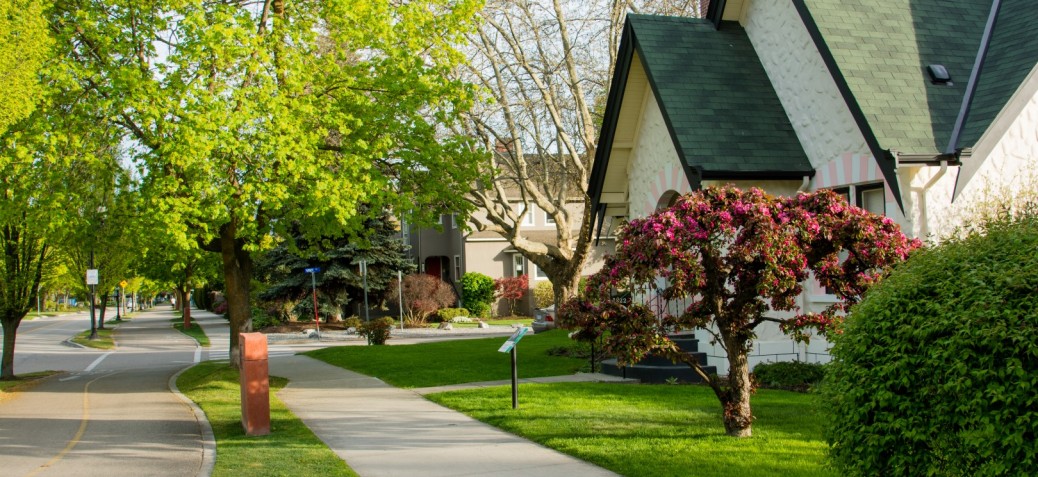
Kelowna’s heritage is a history tied to the land, the cultural environment and the people who have long understood the richness of this area. It is reflected in our historically and architecturally significant buildings, structures, natural landscapes, historic districts, archaeological sites and other places of heritage value.
Kelowna values a balance of growth with the appreciation and protection of our natural, cultural and built heritage assets through integrated and innovative approaches to heritage conservation. Using the City’s Heritage Register, the Development Application and Heritage Procedures Bylaw, and Heritage Strategy, the City will conserve the community’s built heritage, cultural and natural landscapes, and local archaeological sites for generations to come.
While the City has a large stake in the preservation of heritage, acknowledging the syilx/Okanagan people, whose rich history and cultural significance are deeply embedded in the lands encompassing Kelowna, is essential. The diverse partnerships with the syilx/Okanagan people and the local heritage organizations are integral to the overall success of heritage conservation and awareness in Kelowna.
Kelowna has an extensive Heritage Program that is managed collaboratively by staff both in Long-Range Planning and Development Planning. For questions, please contact [email protected] or 250-469-8626. Professional and community support is obtained on an as needed basis from the Canadian Association of Heritage Professionals (BCAHP) registered heritage professionals.
The Kelowna Heritage Register is an official listing of properties within the community that are identified as having heritage value.
More than 200 properties are currently listed on the Kelowna Heritage Register. For each listed property, a Statement of Significance has been written, indicating why the property merits inclusion. Each Statement of Significance provides a basic description and identifies the heritage value and character-defining elements of the historic place.
The Heritage Register identifies, acknowledges and recognizes properties of heritage value in Kelowna to first and foremost raise awareness of heritage places, values and characteristics that are important and unique to the community. The register is also a planning tool that allows us to review and monitor proposed changes that would have an impact our listed heritage properties.
View the Kelowna Heritage Register Map & List
Properties listed on the Kelowna Heritage Register have special status and may be eligible to benefit from the following incentives:
- Heritage Revitalization Agreements to vary the City’s Zoning and Subdivision, Development and Servicing Bylaws. This allows the City to consider, on a case-by-case basis, providing property owners with incentives and bonuses such as increasing density, relaxing height and setback restrictions and relaxing parking restrictions, and allowing appropriate adaptive re-uses. In return for these incentives, the property owners agree to conserve and protect the listed properties.
- Special treatment under the BC Building Code, which permits equivalencies to current building code provisions. The equivalencies allow property owners to upgrade older buildings without requiring strict code compliance, while not compromising safety standards.
- The Heritage Grants Program, administered by the Central Okanagan Heritage Society is designed to promote conservation of residential, commercial, industrial and agricultural heritage buildings by assisting owners with grants for a portion of the costs incurred in conservation work. Eligible work may include reroofing, window and door conservation, siding and porch conservation, work on foundation and repainting. Any owner with a property listed on the Kelowna Heritage Register is eligible to apply for this program. Interested applicants should visit the Central Okanagan Heritage Society's website for more information.
- Our Heritage Building Tax Incentive Program encourages the restoration of agricultural, commercial, industrial and institutional buildings listed on the Kelowna Heritage Register by providing tax breaks for restored revenue generating heritage buildings. Full program details are available in Council Policy No. 318.
Buildings listed on the Kelowna Heritage Register can be altered and may even be demolished. However, City Council may temporarily delay the issuance of a permit to alter or demolish a listed heritage building in order to allow time for other development options and possible conservation incentives to be fully explored with the property owner and City staff.
Inclusion of a property on the Heritage Register doesn’t constitute Heritage Designation or any other form of legal protection. Furthermore, having a building included on the Heritage Register doesn’t restrict the existing development potential of a property, in fact it offers unique incentives as listed above. The property owner is entitled to redevelop the property in accordance with the permitted uses and density of the existing zone of that property.
Heritage status (being listed on the Heritage Register) provides increased access to grants and incentives for heritage conservation. The process to register a heritage property is outlined above and in Development Application and Heritage Procedures Bylaw No. 12310.
To ensure a heritage property cannot be demolished or altered, it must go through an additional process, above and beyond being listed on the Heritage Register, such as entering into a Heritage Revitalization Agreement, a Heritage Designation Bylaw or a Heritage Conservation Covenant.
Requests from property owners to add or remove properties from the Kelowna Heritage Register are reviewed by City staff. The property owner must hire a BCAHP heritage professional to complete a Heritage Register Evaluation Criteria Report. To find a heritage professional visit the Canadian Association of Heritage Professionals Directory filtered to BC. Following the evaluation and staff review, the Long Range Planning Department will forward a recommendation to City Council regarding the proposed addition or removal of the property. The property owners will be advised of Council’s decision.
To apply for a Heritage Registry addition or removal, submit a Standard Development Application Package to the second floor of City Hall.
Full application requirements and process are listed in the Development Application and Heritage Procedures Bylaw No. 12310.
Heritage status (being listed on the Heritage Register) provides increased access to grants and incentives for heritage conservation. The process to add a property to the Heritage Register is outlined above and in the Development Application and Heritage Procedures Bylaw No. 12310 . Heritage properties are important to the City and efforts will be made to negotiate a development scenario that results in heritage protection, which benefits both the property owner and the community. Heritage properties can be protected through approval of a Heritage Designation Bylaw, a Heritage Revitalization Agreement or a Heritage Covenant. To see which properties already have heritage protection, check out the “municipal designation” column on our Heritage Register list . To learn more about protecting your heritage property please contact [email protected] or 250-469-8626.
Kelowna has two Heritage Conservation Areas (HCAs) - the Abbott Street and the Marshall Street Heritage Conservation Areas. Recognized for their heritage value since 1983 and officially established as Heritage Conservation Areas in 1998, these historic areas are valued by the Kelowna community for their historic homes, mature landscaping, scenic character, a strong sense of community, and a unique sense of time and place. Retaining the authentic, historic character of these areas, combined with a careful and customized approach to development, ensures that residents and visitors alike will continue to experience a unique and valued sense of place well into the future. As neighbourhoods that have continuously evolved and densified since their initial settlement, growth will continue through gentle and thoughtful renovations, house conversions, additions, and new buildings.
The Heritage Conservation Areas Conservation & Development Guidelines in Chapter 23 of the Official Community Plan provide precise direction on the unique permitting mechanism for these areas which involve Heritage Alteration Permits.
The following HCA objectives collectively aim to balance development and preservation, ensuring that change and density are managed thoughtfully in the HCAs and are guided by the areas’ unique character and historical significance.
Preservation of Historic Places: Incentivize and prioritize the retention, maintenance and protection of streetscapes, landscapes, properties, buildings and other contributory features, including character and sense-of-place, that are valued in the area, as per the HCAs’ Statement of Significance and Statement of Desired Future Character.
Contextual Design and Scale: New development will consider the immediate historic context and align with the Desired Future Character of the Heritage Conservation Areas. Adhere to the Standards and Guidelines for the Conservation of Historic Places in Canada (Standard 11 and Standard 12), ensuring that new constructions are compatible with, distinguishable from, and subordinate to existing historic structures.
Compatible Adaptation and Use: Incentivize and prioritize the adaptive reuse of Contributory Buildings while conserving their character.
Preservation of Neighbourhood Heritage: Preserve the historical context, landscape, and streetscape character of the neighbourhood as an historical, scenic, recreational, and cultural resource in Kelowna.
Environmental Sustainability: Model and promote the conservation of existing buildings, infrastructure and landscapes as a crucial strategy to achieving a sustainable community and combating climate change.
Properties that contribute to the heritage value of Kelowna’s Heritage Conservation Areas are known as “contributing” properties.
The Contributory Properties Schedule was created based on the criteria below:
1. Listed on the 1983 Heritage Resources Inventory or the Heritage Register (including properties protected by a Heritage Designation Bylaw or a Heritage Revitalization Agreement).
2. Identified as having heritage significance - aesthetic, historic, scientific, cultural, social, spiritual or contextual, sometimes with a plaque out front.
3. Constructed during the most prolific decades of development, beginning in the 1900s and ending in 1959, which gave the neighbourhood its valued character, as noted in the Statement of Significance.
4. Exhibit character-contributing built form with elements such as 1-2.5 storey height with traditional roof forms (gable, hip, gambrel, flat etc.) prominent or end-wall chimneys, bay and picture windows, wood and/or stucco cladding, traditional porches, entries and doors, and rich, contrasting paint schemes.
5. Exhibit character-contributing siting and landscaping such as lining up approximately with the neighbouring houses siting, yard featuring mature or traditional landscaping, curved pathways, openly visible from the street.
Buildings listed on the HCA Contributory Property List can be altered and may even be demolished. However, City Council may temporarily delay the issuance of a permit to alter or demolish a Contributory Property in order to allow time for other development options and possible conservation incentives to be fully explored with the property owner and City staff.
Inclusion of a property on the HCA Contributory Property List doesn’t constitute Heritage Designation or any other form of legal protection. Furthermore, having a building included on the Contributory Property List doesn’t restrict the existing development potential of a property, in fact it offers unique incentives as listed above. The property owner is entitled to redevelop the property in accordance with the permitted uses and density of the existing zone of that property.
To ensure a heritage property cannot be demolished or altered, it must go through an additional process, above and beyond being listed on the Contributory Property List, such as entering into a Heritage Revitalization Agreement, a Heritage Designation Bylaw or a Heritage Conservation Covenant.
Requests from property owners to add or remove properties from the Contributory Property List are reviewed by City staff. Following staff review, the Long Range Planning Department will forward a recommendation to City Council regarding the proposed addition or removal of the property. The property owners will be advised of Council’s decision.
A Heritage Alteration Permit (HAP) is required for the following types of development projects on designated (protected) heritage properties and for all properties within the Heritage Conservation Areas:
- Construction of, addition to, or external alteration of a building or structure
- Demolition of a building or structure
To apply for a HAP, submit a Standard Development Application Package to the second floor of City Hall. Your HAP will be processed as per the Development Application and Heritage Procedures Bylaw No. 12310.
Please note that a Heritage Review by a Registered Heritage Consultant, is a required report as part of your HAP application. The Heritage Review report must be completed by a Registered Heritage Professional (a member of the BC Association of Heritage Professionals). To find a Heritage Professional visit The Canadian Association of Heritage Professionals Directory filtered to BC. It’s best to involve the Heritage Professional before any design work or site planning takes place so that they can be aware of an owner’s plans and needs for the heritage property and provide any early pointers or observations before the proposal gets developed. The Heritage Professional can help guide and inform the plans so that they are aligned with national conservation Standards & Guidelines, local policies and guidelines.
A Heritage Revitalization Agreement (HRA) is a formal, voluntary, written agreement that is negotiated between a property owner and the City. It outlines the duties and obligations of, and the benefits to both parties of the agreement. The HRA enables the City to vary zoning regulations and to provide non-financial incentives which would make it viable for owners to conserve property of heritage value.
An HRA involves long-term, legal protection enabled with a bylaw that is registered on the title of the property. It is written to suit unique properties and situations. Therefore, each HRA is different from the next and does not create precedence. Please note that a Heritage Review by a Registered Heritage Consultant, is a required report as part of your HRA application. The Heritage Review report must be completed by a Registered Heritage Professional (a member of the BC Association of Heritage Professionals). To find a Heritage Professional visit The Canadian Association of Heritage Professionals Directory filtered to BC. It’s best to involve the Heritage Professional before any design work or site planning takes place so that they can be aware of an owner’s plans and needs for the heritage property and provide any early pointers or observations before the proposal gets developed. The Heritage Professional can help guide and inform the plans so that they are aligned with national conservation Standards & Guidelines, local policies and guidelines.
Protecting Archeological Sites
Know your role in protecting BC's archaeological sites. If you are planning on developing your property, please review our City of Kelowna Bulletin on Archaeological Sites. For more information you can visit the Province of BC's Archaeology Branch website and review the Provincial Property Owner Brochure to learn your responsibilities as a property owner.
Bulletin - Archaeological Sites
Historic City Permit Records:
As part of the contract with the property owner, the heritage professional should require the owner to submit a Property Information Request. This will provide owners with a copy of City documents and plans from the Building & Permitting branch regarding a specific property.
Kelowna Public Archives:
Reach out to Tara Hurley ([email protected]) at the KPA to set up a research appointment or to obtain historic records via e-mail. The KPA holds historic photographs, fire insurance plans, directories, tax ledgers and many other records that could provide historic context for the property.
UBCO Special Collections:
UBC Okanagan Campus has digitized a massive variety and quantity of historic records and has stewarded the British Columbia Regional Digitized History which contains lots of Kelowna and Okanagan records.
Kelowna Heritage Register:
If the property is listed on the Kelowna Heritage Registry it will have a Statement of Significance and description published on the Kelowna website. Further questions contact [email protected].
Visit our Heritage in Kelowna page for more information.